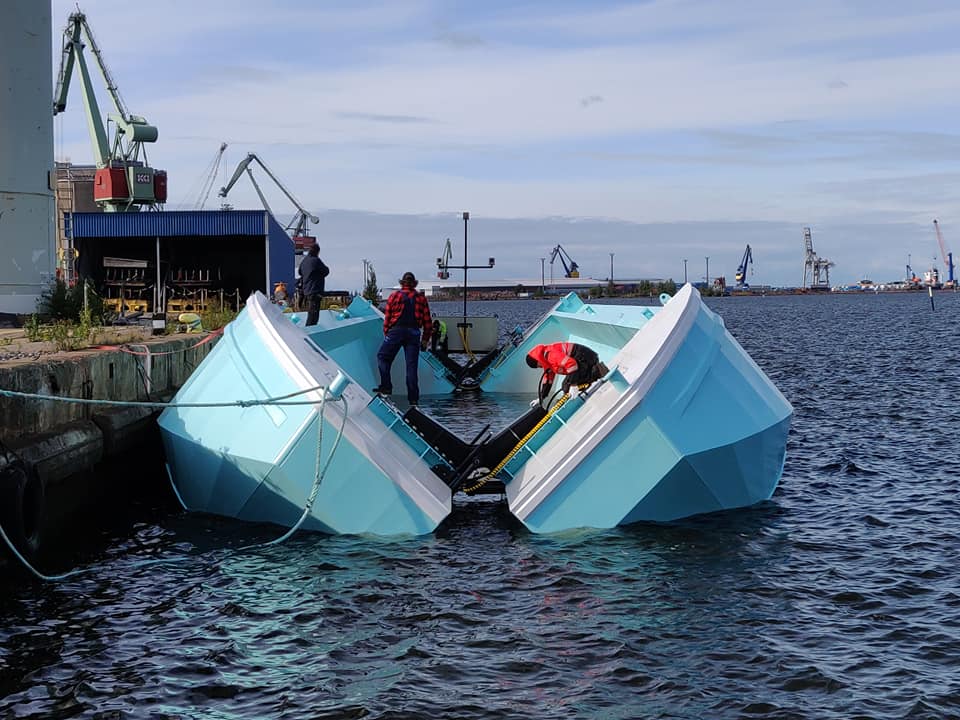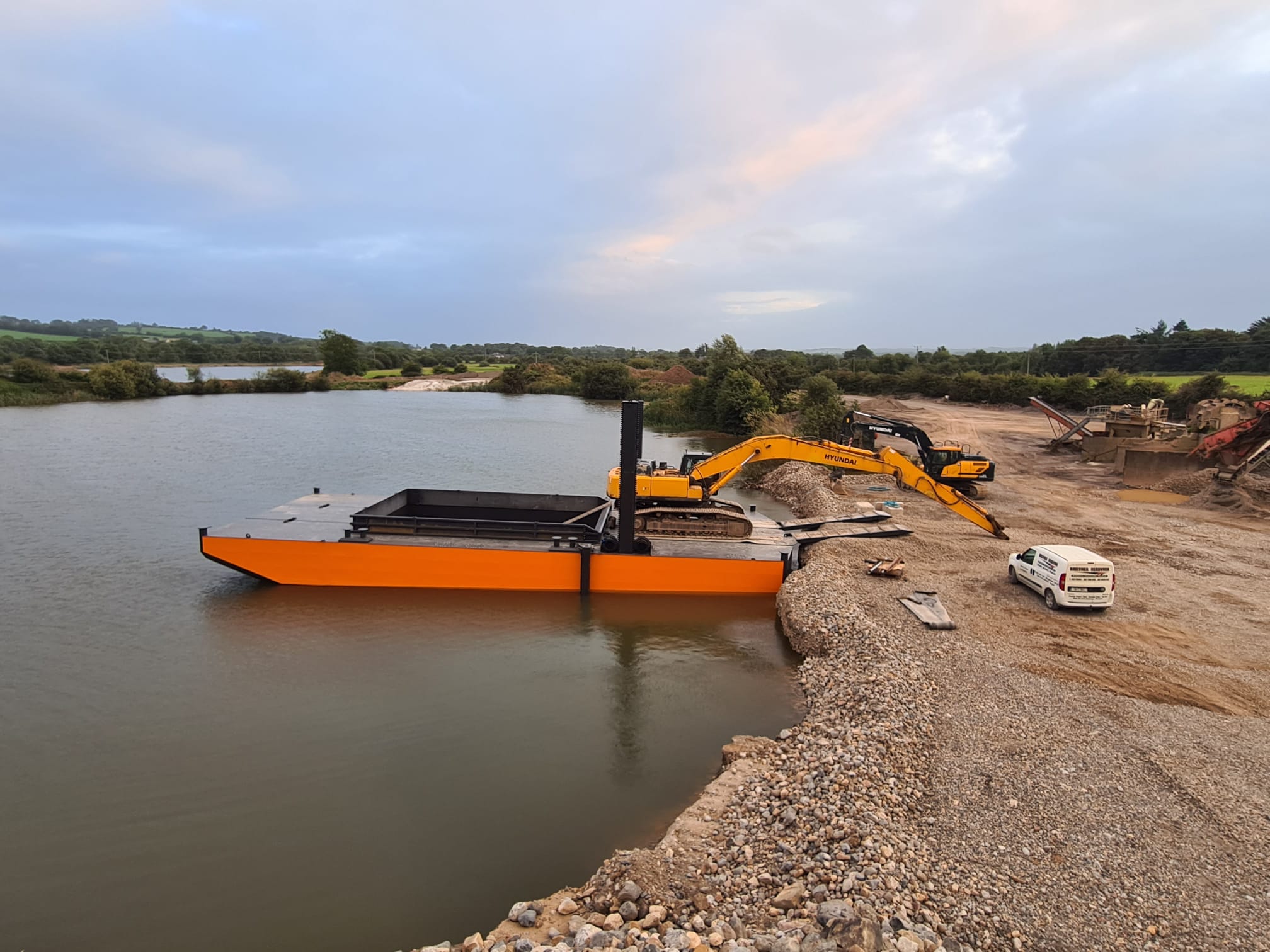
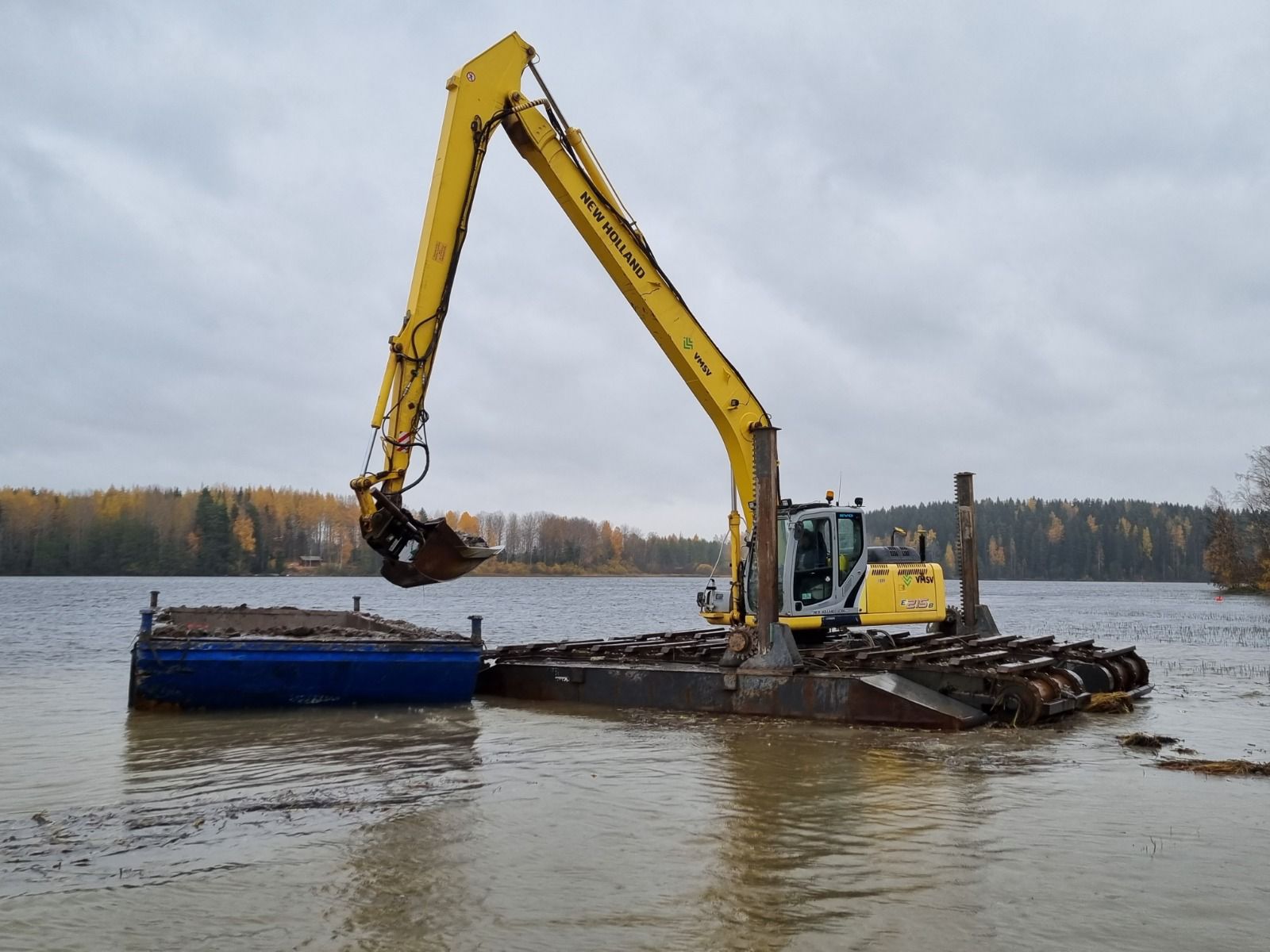

Tracked pontoon undercarriage systems enabling excavators to operate in shallow water, wetlands and soft ground environments where standard equipment cannot work.
Category Overview
Amphibious tracked undercarriages are pontoon-based undercarriage systems that allow excavators to work in shallow water, wetlands, marsh environments, tidal zones, and other soft-ground conditions where conventional crawler excavators cannot operate effectively.
These pontoon undercarriage solutions are typically selected for dredging support, inland water operations, reclamation work, environmental projects, and marine construction tasks where access and flotation are just as important as lifting and digging capability.
Every project is reviewed individually, and the most suitable solution is not always a standard model. Platform dimensions, deck arrangement, load capacity, transport constraints, working equipment, and site conditions all affect what should be built for the job.
If you would like us to recommend the best-fit solution first, start by sharing your project requirements and we will propose the most suitable configuration. If you already know the type of platform you need, you can review the models below.
Discuss your projectNo amphibious tracked pontoons match your load capacity range requirements.
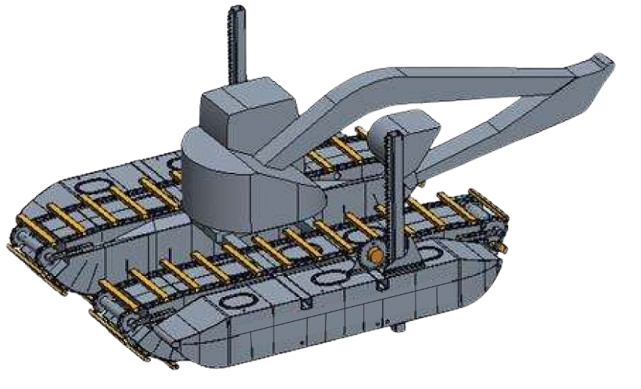
Auxiliary Pontoons (Sponsons)
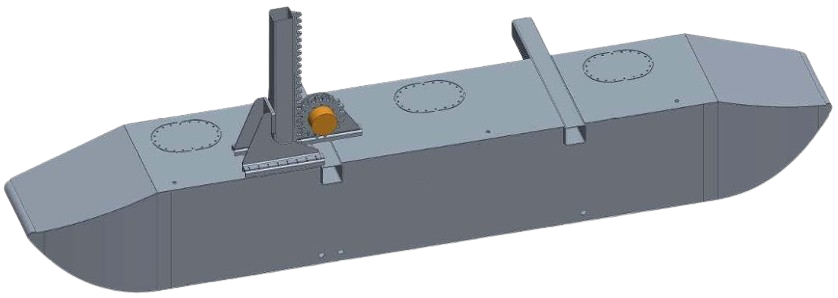
Auxiliary Pontoons (Sponsons)
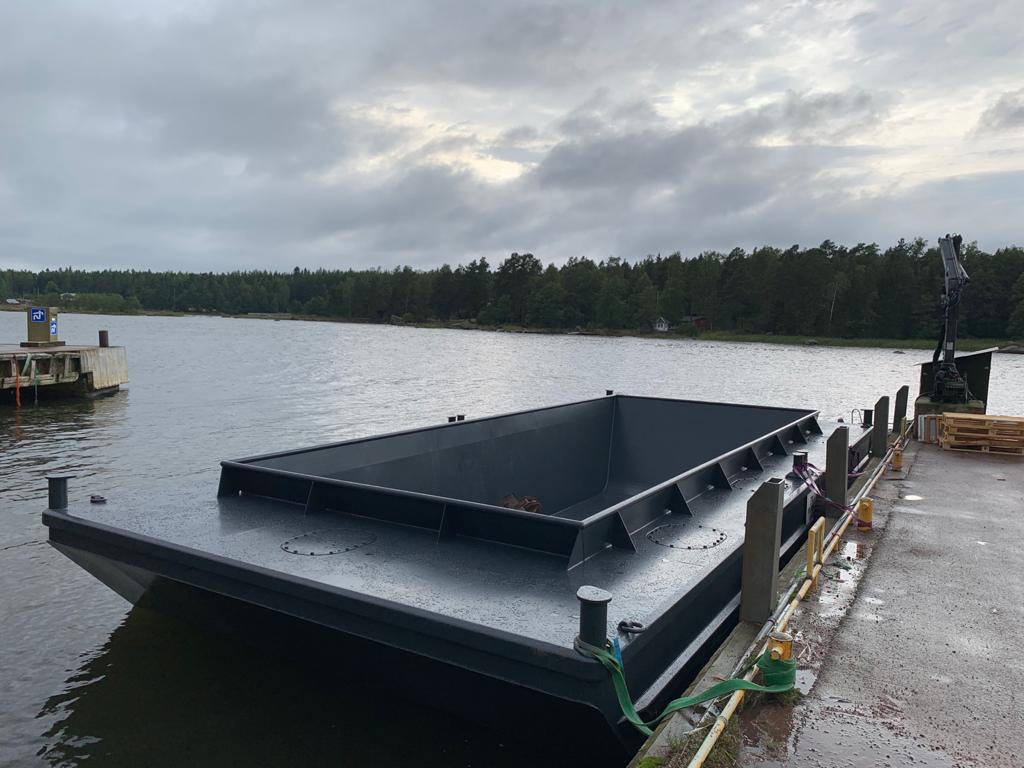
For projects where excavator mobility is not required, machines can often operate from steel pontoons or floating work platforms instead. This can be a more practical and cost-effective approach for stationary or semi-stationary marine operations.
Explore Steel Work Barges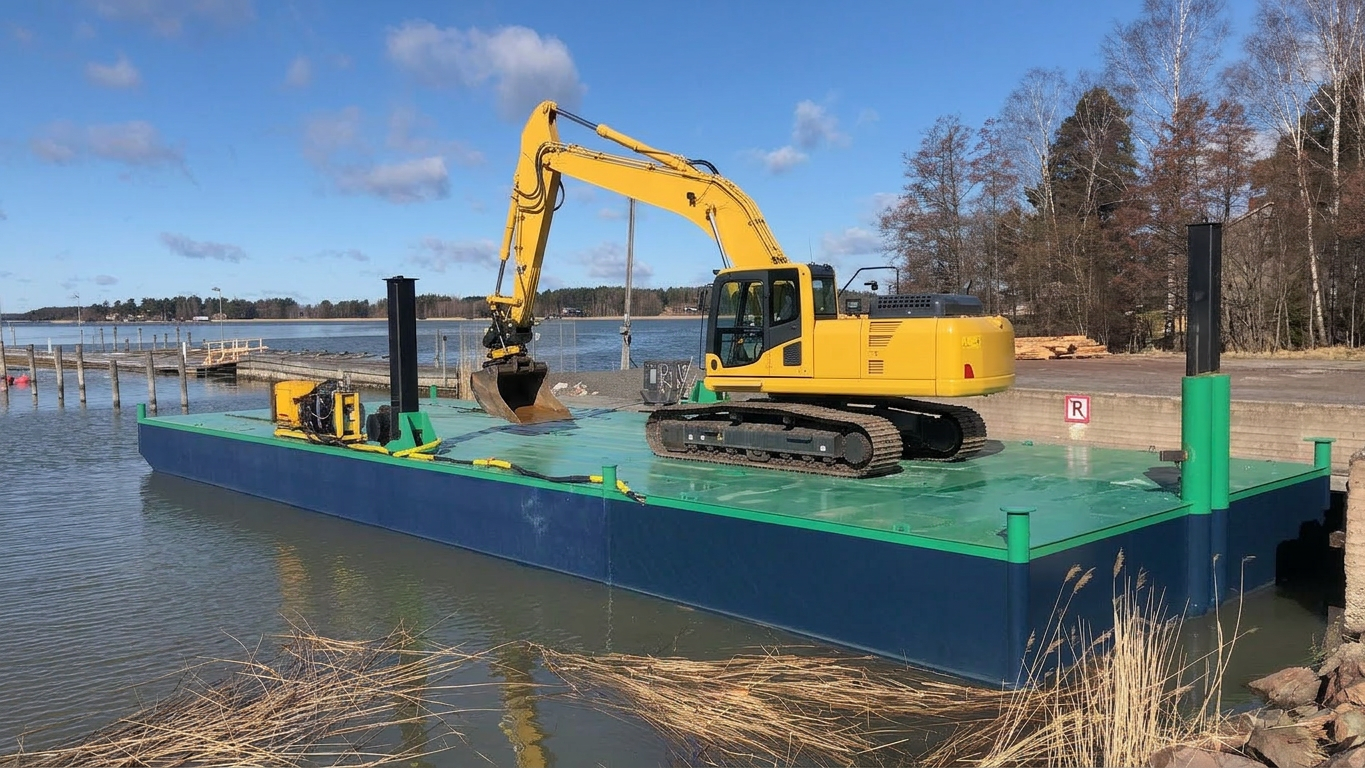
Amphibious tracked undercarriages are also commonly referred to as amphibious tracked pontoons, pontoon undercarriages, amphibious excavator pontoons, floating crawler bases, or amphibious track systems. Terminology varies by region and industry, but the underlying function remains the same.
Each undercarriage is designed for specific excavator weight classes and mounting points. We'll confirm compatibility with your machine model and, if needed, adapt the interface to ensure safe and stable installation.
They are designed for operation in soft, swampy, and shallow-water environments where standard tracked equipment cannot work. Depending on the model, they can handle varying depths and soil types typical of dredging, reclamation, or environmental projects.
Yes. The units can be disassembled into pontoons and track frames for transport by truck or container. Assembly on site is straightforward, allowing fast relocation between jobs.
Lead times depend on the specific model and current production schedule. Some components are already available, and we plan production to meet your deadlines. We'll confirm an indicative delivery timeframe when you request a quote.
We normally deliver ready-assembled units by road or sea, but can adapt logistics if the destination requires another method. Each project has its own routing and constraints - the main point is that we'll find the most practical and cost-effective delivery solution and handle the details with you directly.
Yes. We offer ongoing support for maintenance, repairs, and spare components. Our team stays available after delivery to help with any operational questions or parts replacement, ensuring the equipment stays in service with minimal downtime.
To recommend the right pontoon configuration, we typically need:
• required load capacity
• target deck size or working area
• equipment type and weight (if machinery will be installed)
• brief description of how the platform will be used
• project location and delivery region
Based on this, we assess buoyancy, stability, deck strength, and overall feasibility — and then propose a suitable solution.
Contact our marine experts to discuss your project requirements and get a detailed quote for your vessel needs.
Our engineers respond within one business day
Related models and alternative solutions: